What is Ecosystem Building? A Strategic Guide for Organizations in India
Introduction
In an increasingly interconnected world, organizations are beginning to recognize that complex challenges cannot be solved in isolation. Whether it is climate resilience, inclusive growth, digital transformation, or public health, the problems of today demand collaborative approaches that go beyond individual capabilities. This shift has brought ecosystem building into the center of strategic thinking. It is no longer just a conceptual idea but a practical and necessary approach for organizations aiming to create long term value and meaningful impact.
What is Ecosystem Building
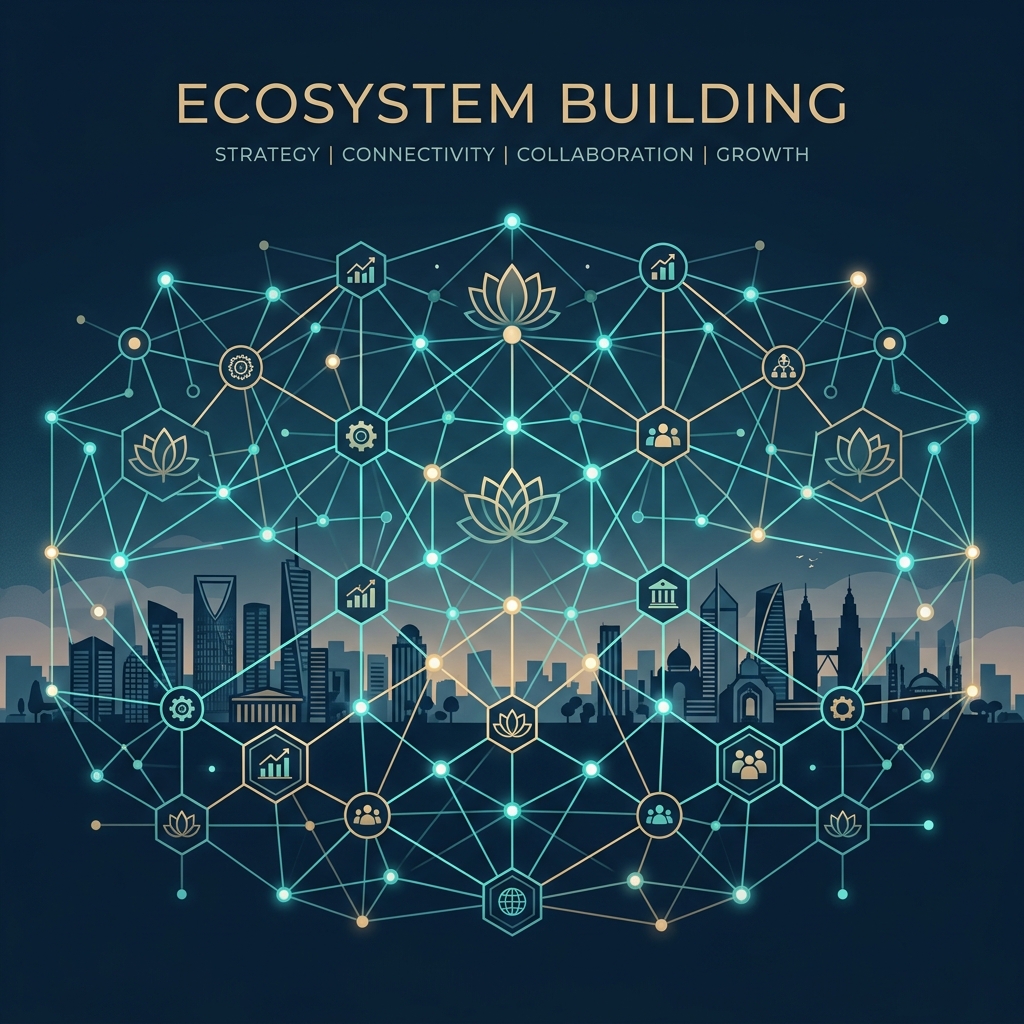
Ecosystem building refers to the intentional creation and nurturing of a network of interconnected stakeholders who work together toward a shared objective while generating mutual value. Unlike traditional partnership models that are often transactional and short term, ecosystems are dynamic, collaborative, and rooted in long term alignment. They bring together a diverse set of actors including corporates, government institutions, startups, civil society organizations, investors, and academic bodies. The aim is to move from isolated interventions to integrated systems that can drive sustained change.
Why Ecosystem Building Matters in India
The relevance of ecosystem building becomes even more pronounced in the Indian context. India operates within a landscape of scale, diversity, and structural complexity where multiple challenges are deeply interlinked. Agriculture is connected to climate and market systems, education is tied to skilling and employability, and healthcare depends on infrastructure, policy, and awareness. With over 150 million smallholder farmers, rapid urbanization, and increasing pressure on natural resources, the limitations of siloed approaches become evident. Ecosystem building enables organizations to bridge these gaps, align capabilities across sectors, and unlock more resilient and scalable solutions.
Core Elements of a Strong Ecosystem Strategy
Shared Vision and Purpose
A clearly defined shared vision aligns all stakeholders toward a common purpose. Without this, collaboration tends to become fragmented and ineffective.
Strategic Stakeholder Mapping
Effective ecosystems are built on identifying stakeholders based on the unique value they bring. Each participant must contribute meaningfully through expertise, capital, networks, or implementation capacity.
Trust Based Engagement
Ecosystems rely on long term relationships that are built on transparency, consistency, and mutual respect. Trust is the foundation that sustains collaboration over time.
Structured Platforms for Interaction
Leadership roundtables, policy dialogues, and innovation forums provide structured spaces for stakeholders to interact, exchange ideas, and align priorities.
Continuous Value Exchange
For an ecosystem to remain active, all participants must derive both tangible and intangible benefits, ensuring sustained engagement.
Role of Convenings in Ecosystem Building
Convenings play a critical role in transforming fragmented stakeholders into cohesive ecosystems. They bring decision makers together in high trust environments where meaningful dialogue can take place. Well curated convenings enable focused discussions, alignment on priorities, and exploration of collaborative opportunities. They help translate ideas into actionable pathways and often serve as the starting point for long term partnerships. The effectiveness of these platforms depends on thoughtful design, strong facilitation, and consistent follow through.
Common Challenges in Ecosystem Building
Misaligned Incentives
Stakeholders often operate with different priorities and expectations, which can create friction and slow progress.
Fragmented Ownership
The absence of clear leadership can result in a lack of direction and accountability within the ecosystem.
Communication Gaps
Without structured communication channels, collaboration can weaken over time and reduce effectiveness.
Short Term Orientation
Many organizations struggle to adopt the long term perspective required for ecosystem success.
Addressing these challenges requires strong governance structures, skilled facilitation, and adaptive strategies that can evolve with changing needs.
Ecosystem Building as a Strategic Capability
Forward looking organizations are now treating ecosystem building as a core strategic capability rather than an optional initiative. This involves embedding ecosystem thinking into organizational strategy, investing in relationship building, and designing platforms that enable sustained engagement. It also requires shifting the focus from short term outputs to system level impact. Organizations that can effectively orchestrate diverse stakeholders are better positioned to navigate complexity and create lasting value.
Conclusion
Ecosystem building represents a shift in mindset from control toward collaboration, from isolated success toward shared impact, and from short term execution toward long term transformation. In a country like India, where challenges and opportunities are deeply interconnected, the ability to build and sustain ecosystems will define the next phase of growth and innovation. Organizations that embrace this approach will not only remain relevant but will also play a leading role in shaping a more inclusive and resilient future.
Want more insights?
Join our strategic network to receive curated executive perspectives directly in your inbox.